Matter Intake and Follow-Up System
A legal operations project for a small civil litigation firm.
Sample project: designed and built independently for a small civil litigation firm scenario, using Clio Manage and Google Workspace.
6-person
civil litigation firm, Seattle
5 stages
in Clio, from intake to closing
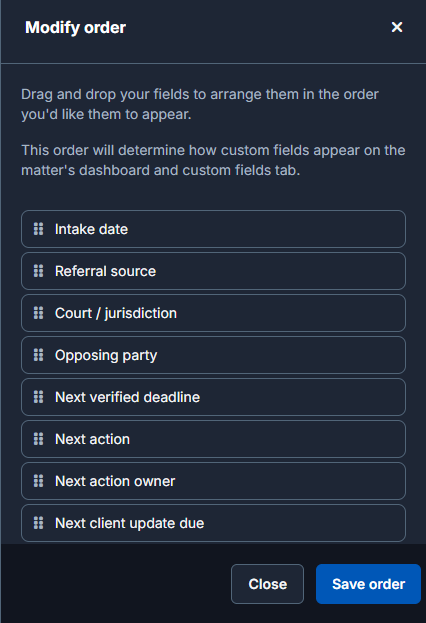
8 fields
tracking next steps and deadlines
3 matters
built at different stages
The situation
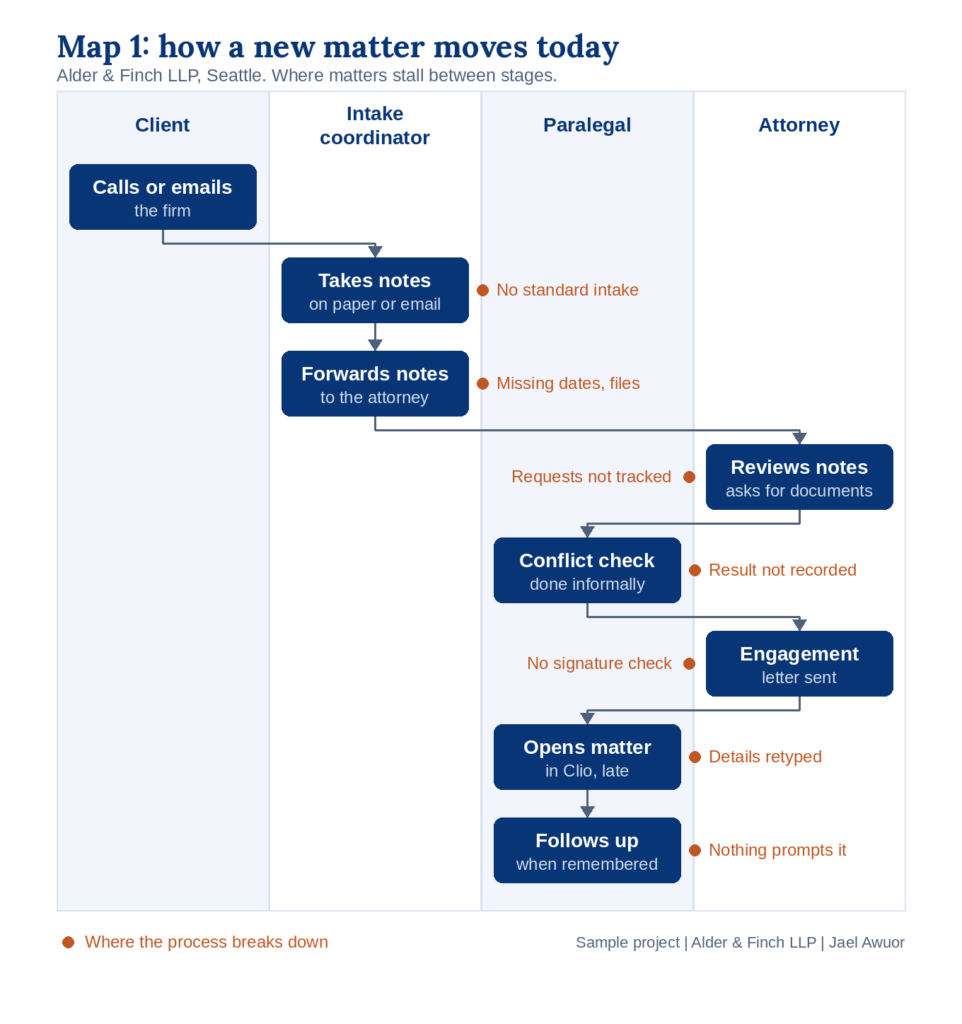
Alder & Finch LLP’s matters rarely stall inside the legal work. They stall between stages: a date reported at intake is treated as a deadline before anyone verifies it, a document request depends on someone remembering, and a handoff does not say who owns the next step.
Intake notes arrive in different forms, so dates and documents go missing
Reported dates are treated as deadlines before they are verified
Document requests and follow-ups depend on memory
Handoffs leave out the owner and the next step
Clients are updated irregularly because no one owns the next update
My approach
1
Map today
See how work moves now and mark where it breaks down.
2
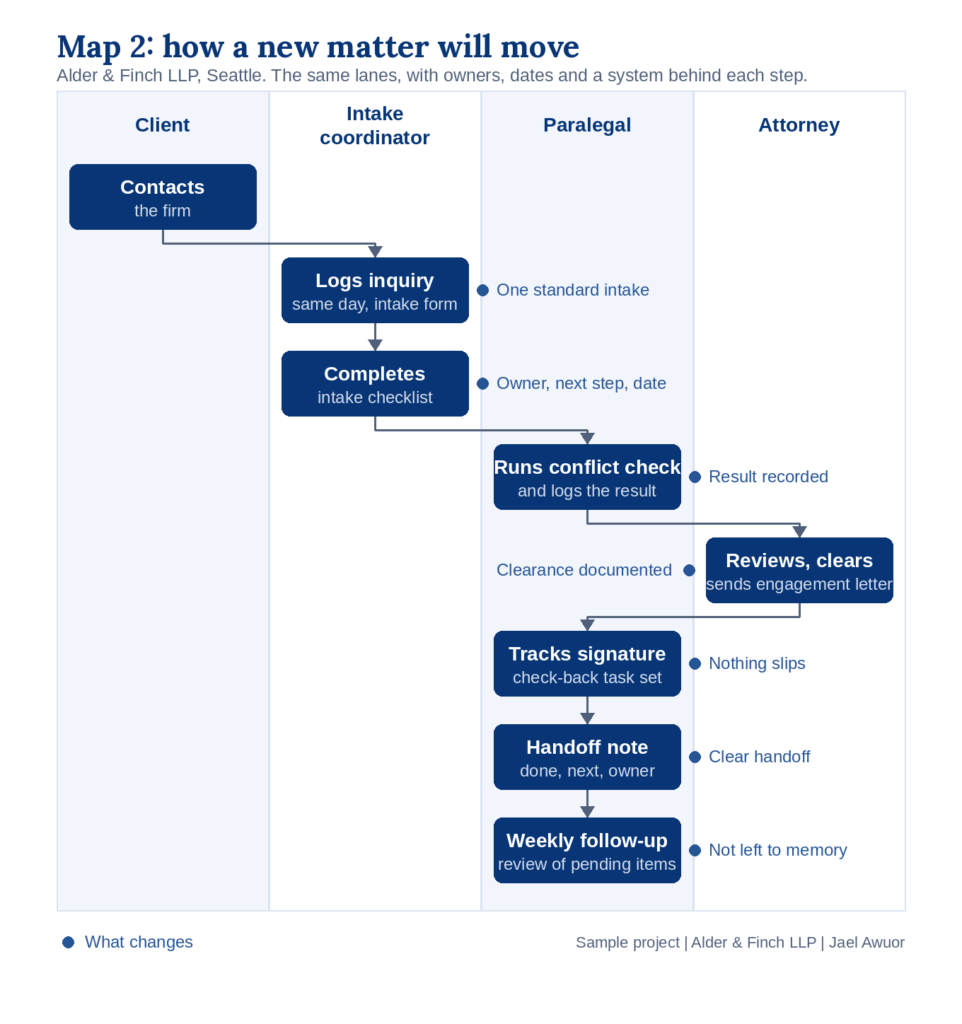
Design the future
Add owners, dates and a system behind each step.
3
Build the documents
Checklist, intake form, follow-up rules and templates.
4
Build it in Clio
So the process lives where the work happens.
How work moves, before and after
What I built
| Deliverable | What it does |
|---|---|
| Legal Matter Intake Checklist | Five stages from client details to attorney handoff, with owners and next actions |
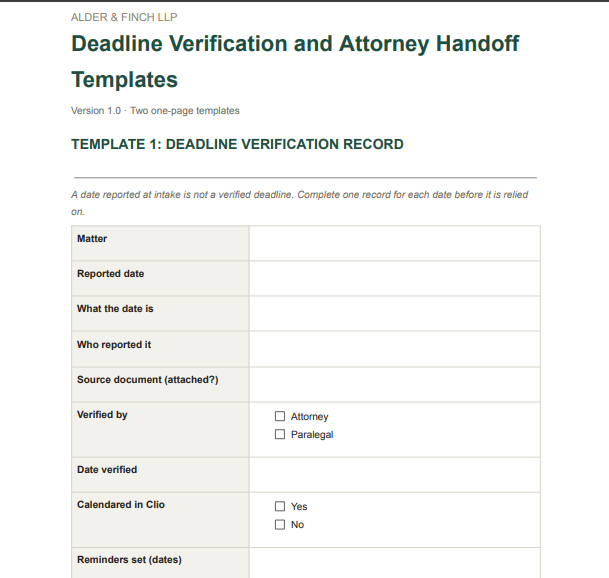
| New Matter Intake Form | A client section and an internal section, with a verified-dates table |
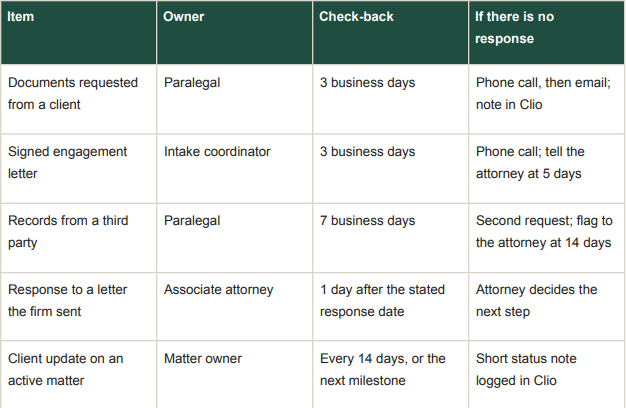
| Follow-up rules | Check-back dates for every request, a 14-day client update rhythm and a weekly review |
| Deadline and handoff templates | So no reported date is relied on until it is verified |
| Clio build | One practice area, five stages, eight custom fields, three task lists, a matter template and three sample matters |
The build in Clio
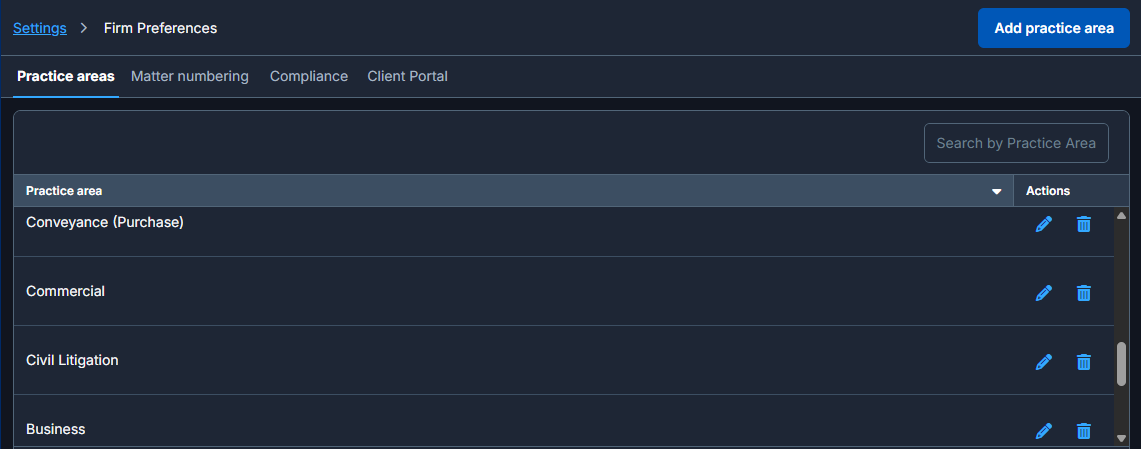
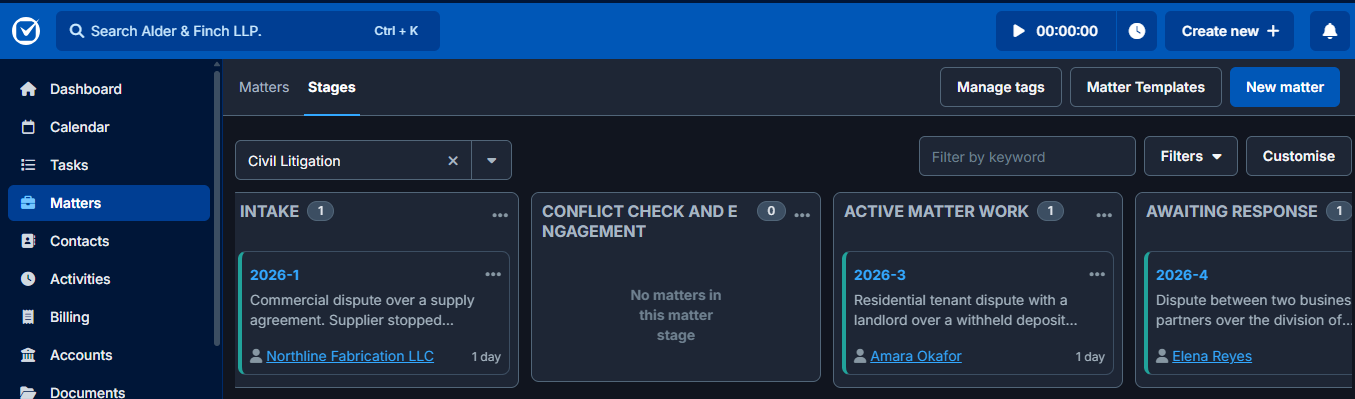
The Civil Litigation practice area and its five matter stages.
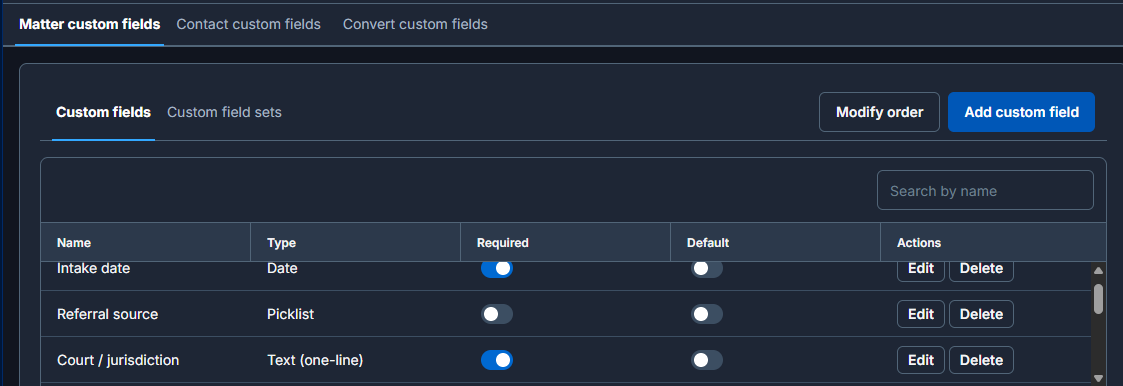
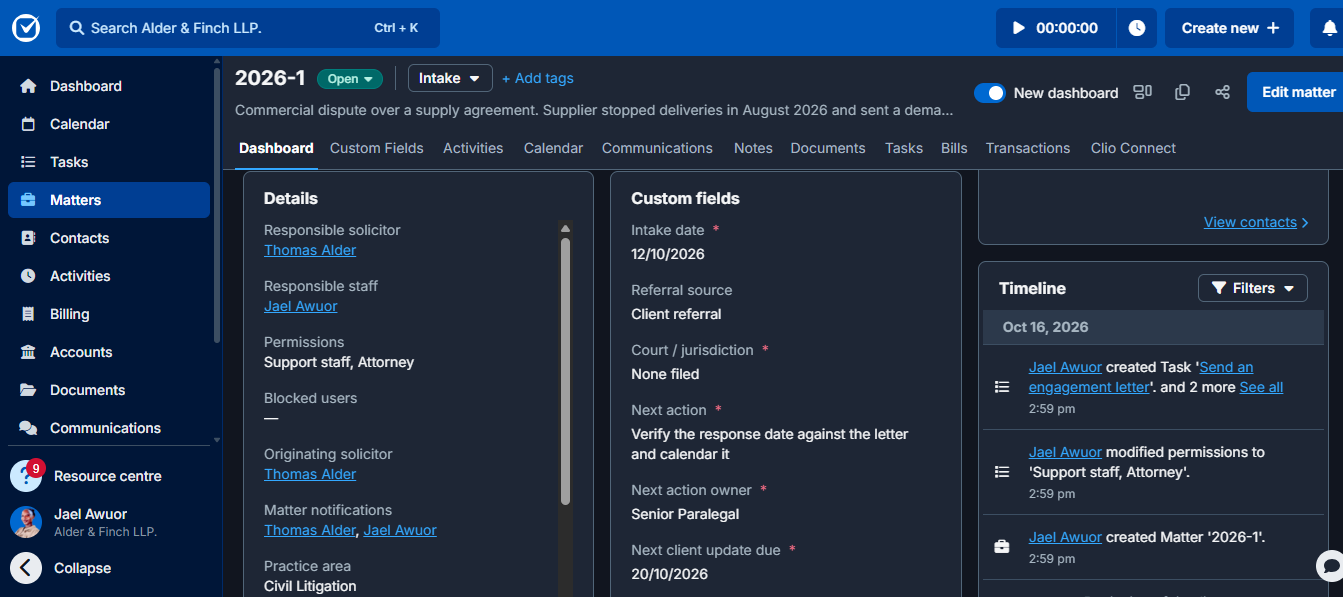
Fields for the next verified deadline, next action, owner and client update date.
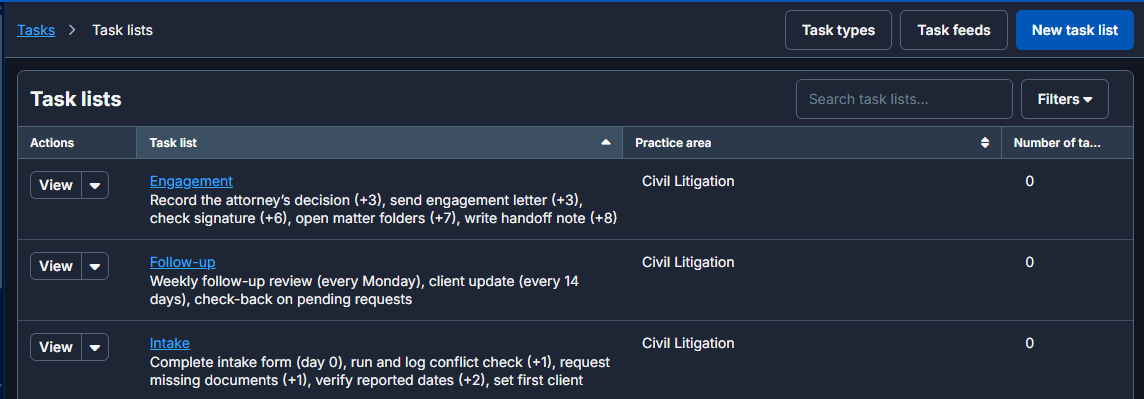
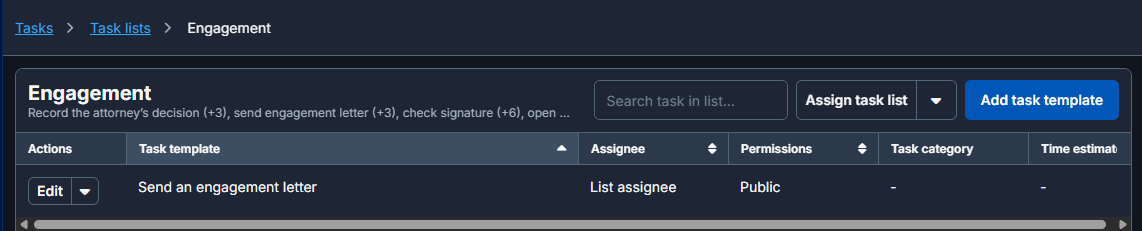
Task lists for intake, engagement and follow-up.
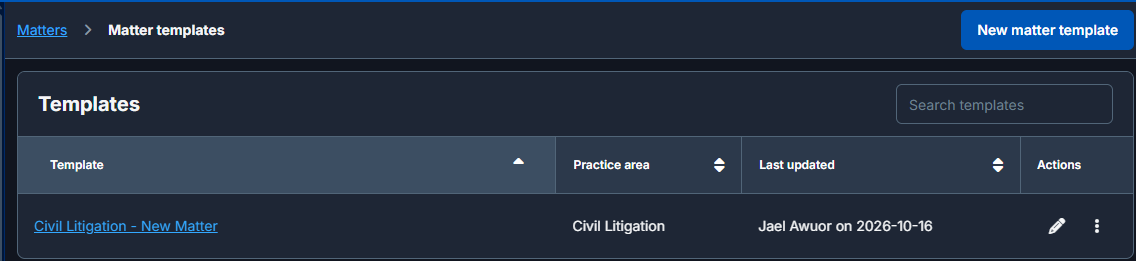
One template that starts every new matter the same way.
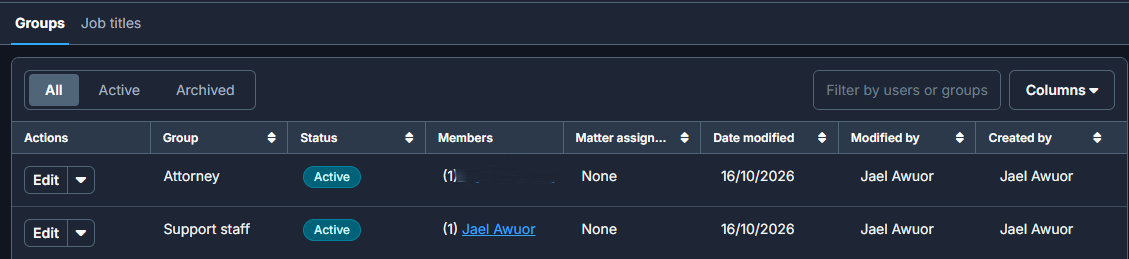
Attorney and support-staff groups.
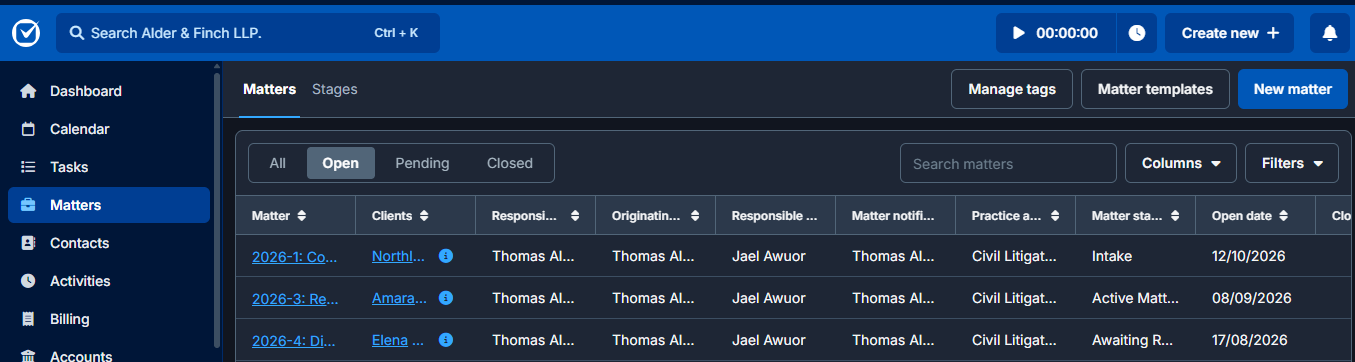
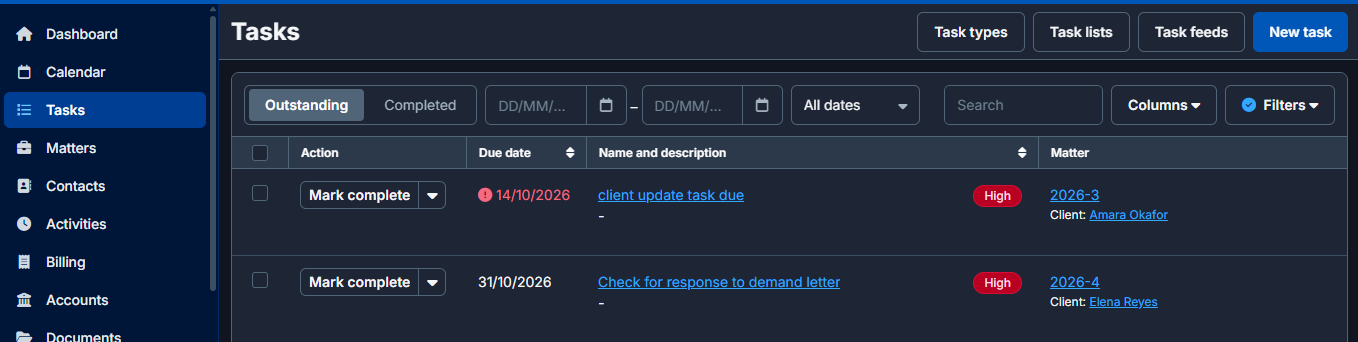
Three matters at different stages, with next actions and an overdue update.
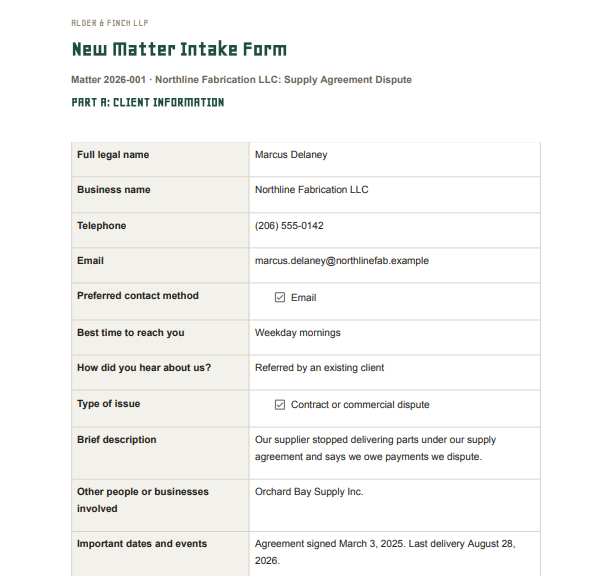
Inside the system
Want the full documents? Start a conversation
Three design decisions
A reported date is not a verified deadline
The Next verified deadline field stays blank until the date is checked against its source.
Every matter has a next step
A next action, an owner and a due date, always.
Every request has a check-back
And a 30-minute weekly review catches anything overdue.
How success would be measured
New matters with an owner, next action and due date at handoff
Document requests with a check-back date
Overdue follow-ups at the weekly review
Time from first inquiry to first client response
What I would do next
Run the system on live matters for 30 days, review the overdue follow-ups each week, and adjust the check-back windows to the way the team actually works.
Want help with your firm's intake and follow-up?
Tell me where matters slow down. I’ll reply personally.
All names, matters and data in this project are sample data.